

Anchorage Continuum of Care (CoC)
The Anchorage Continuum of Care brings partners together to help prevent and end homelessness through coordinated planning, funding, data, housing systems, and community collaboration.
-

What We Do
Explore the programs, coordinated systems and collaborative efforts that make up Anchorage’s homelessness response.
-

Advisory Council
Learn about the Advisory Council, its committees, and the people who help guide the work of the Continuum of Care.
-

CoC Membership
Find out who can join the Continuum of Care, what membership means, and how to get involved.
-
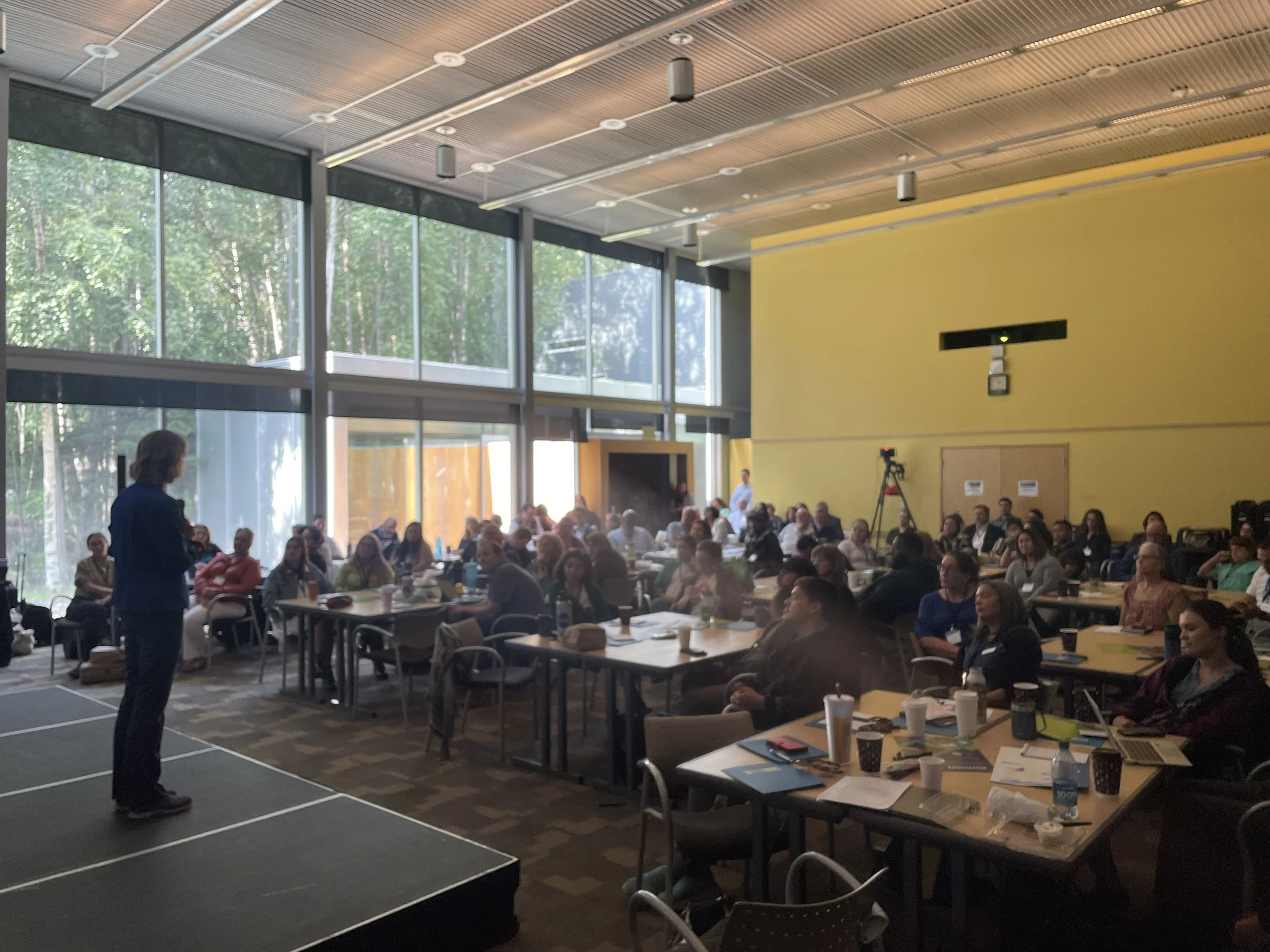
Meetings & Events
Access meeting information, calendars, agendas, minutes, governance documents and key CoC resources.
About the Continuum of Care
The Anchorage Continuum of Care (CoC) is a communitywide system that coordinates Anchorage’s response to homelessness. The Anchorage Coalition to End Homelessness (ACEH) serves as the lead agency, supporting planning, collaboration, data management, and system improvement across partners.
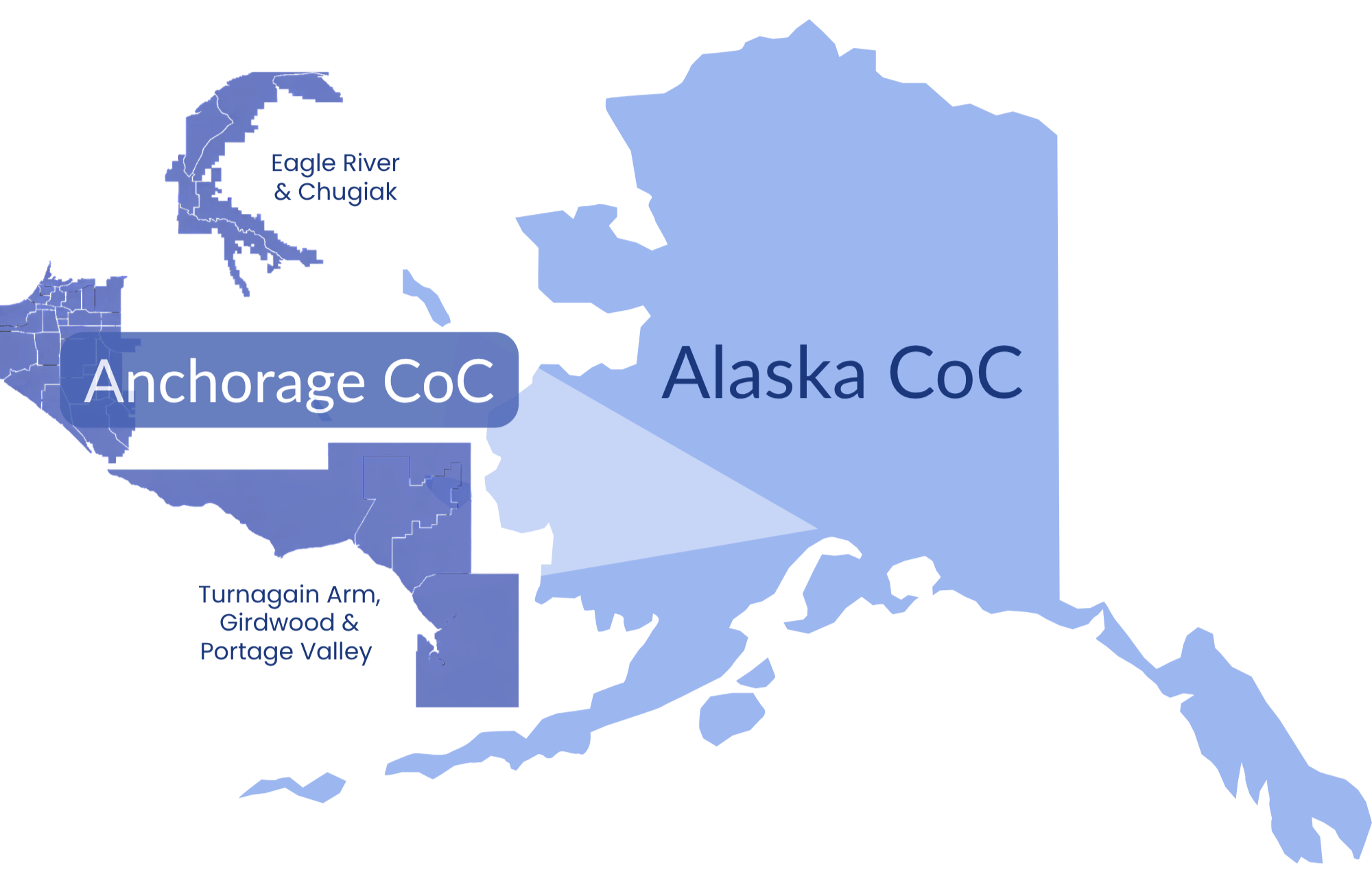
The CoC operates under a framework established by the U.S. Department of Housing and Urban Development (HUD), which provides federal funding and guidance to communities working to prevent and end homelessness. The Anchorage CoC covers the area from the Knik Arm Bridge to the Whittier Tunnel.
The Advisory Council serves as the governing body of the Anchorage CoC, guiding community planning, funding priorities, and system coordination through a collaborative, community-based process.
Together, ACEH, the Advisory Council, and community partners work to align resources, strengthen coordination, and reduce the trauma of homelessness. The CoC supports efforts such as rapid rehousing, long-term housing stability, street outreach, and tailored services, including support for people fleeing domestic violence, dating violence, sexual assault, and stalking.
Continuum of Care membership
Anchorage organizations and community members are invited to join the Continuum of Care and help shape our community’s response to homelessness.
The Continuum of Care (CoC) is a network of partners working together to improve how people access housing, services, and support. As defined by the U.S. Department of Housing and Urban Development (HUD), CoC members include individuals and organizations within, and those that interact with, the homelessness response system.
Members may include housing providers, public agencies, Tribes, healthcare and behavioral health partners, outreach teams, first responders, victim service providers, schools, and people with lived experience.

Become a member
Membership is free and strengthens our community’s strategy. The Anchorage Continuum of Care invites anyone interested in joining to sign up below
Organizational Membership
-
Organizational membership is designed for entities that work with people experiencing homelessness or support the CoC’s mission. This includes:
Nonprofit homeless service providers
Government agencies
Health and behavioral health partners
Housing developers
Faith-based groups
Advocacy groups
Tribal organizations
Cultural organizations
Businesses and business groups
Philanthropic partners
Universities
People with lived experience of homelessness
(Add or tailor categories that match Anchorage’s context.)HUD Exchange
-
Designate a primary contact responsible for representing the organization.
Attend CoC or committee meetings regularly.
Follow applicable CoC governance and conflict-of-interest policies.
Complete any required orientation if set by the governance charter.
-
One voting representative at CoC meetings.
Opportunity to help set priorities for local CoC planning and funding decisions.
Recognition on the CoC membership list (optional).
Priority access to trainings and funding opportunity notifications.
Individual Membership
-
Individuals may join the Anchorage CoC if they:
Want to help strengthen our community’s approach to homelessness.
Agree to the responsibilities of membership (see below).
-
Attend a minimum number of CoC or committee meetings (to be defined by CoC governance).
Participate in voting, discussions, or advisory roles as applicable.
Complete any required orientation if designated by the CoC governance policies.
-
Eligibility to vote on CoC planning priorities and statewide collaborative plan recommendations (per governance charter).
Ability to serve on CoC committees, workgroups, or advisory panels.
Priority invitations to trainings and stakeholder events