
Officials expand emergency shelter as cold winter settles in
As winter’s cold descended on Anchorage, many of those sleeping outside in wooded sites, doorways, vehicles and other places where no one should live sought warmth in shelters. Municipal officials quickly activated additional shelter space. The strategy is part of the city’s evolving new approach to get people indoors and on a path to stability.
The Municipality now operates 300 year-round shelter beds split among three locations, an expansion of a shelter system that was all privately funded before the pandemic. No one expected those beds would be enough in winter.
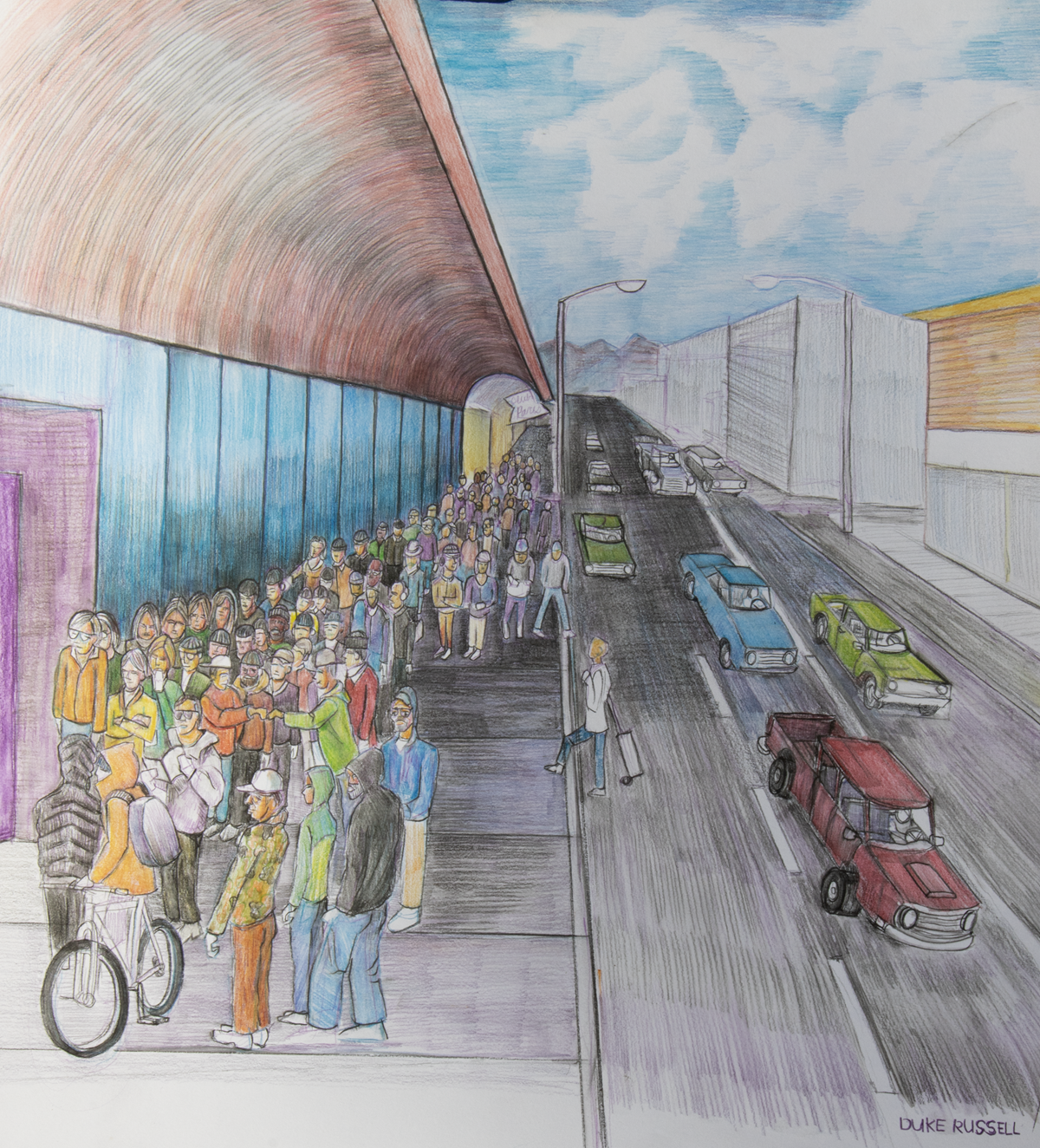
People experiencing homelessness flocked to the Egan Center in September for the Project Homeless Connect resource fair.
(Illustration by Duke Russell)
So in recent weeks, officials phased in an additional 100 cold weather beds, the planned surge capacity. When those beds filled and the weather turned dangerously cold and windy, officials got Anchorage Assembly emergency approval for 25 more, bringing the total Municipal beds to 425. Counting those in shelters run by private organizations such as Catholic Social Services, along with special population beds, Anchorage has shelter space for more than 1,000 people this winter, according to the Municipal shelter dashboard and other sources.
That’s still not serving everyone. Hundreds of individuals continue to live rough in Anchorage, struggling to find a space in a shelter or uncomfortable with the challenges of a congregate setting. Some are reluctant to leave friends behind, their chosen family. Others don’t know where to go.
The city-backed support system is trying multiple ways to help, Cathleen McLaughlin with Restorative & Reentry Services told the Anchorage Assembly Housing and Homelessness Committee at its December meeting.
The Anchorage Safety Center, traditionally the place for those who are dangerously incapacitated, now is open to all who need it, as long as there is space. Individuals can sleep there and if a shelter bed opens up, they will be transported over, McLaughlin said.
Beyond that, her organization and the Anchorage Police Department HOPE team are placing people who are willing to work with a case manager or follow other stipulations in low-cost hotels using private dollars from the new Good Neighbor Fund. Those stays are temporary but can get people on a more stable course.
“We are doing everything we can to triage everyone we can on a 24-7 basis,” McLaughlin said. She told Assembly members that shelters should be at capacity, so that all available inventory is used.
Outreach teams from various agencies are doing more to coordinate efforts. Shelter providers are in contact throughout the day about openings.
Assembly member Felix Rivera said the now-integrated system is “night and day” compared to a few years ago.
“Everything is so much better than it was,” he said.