
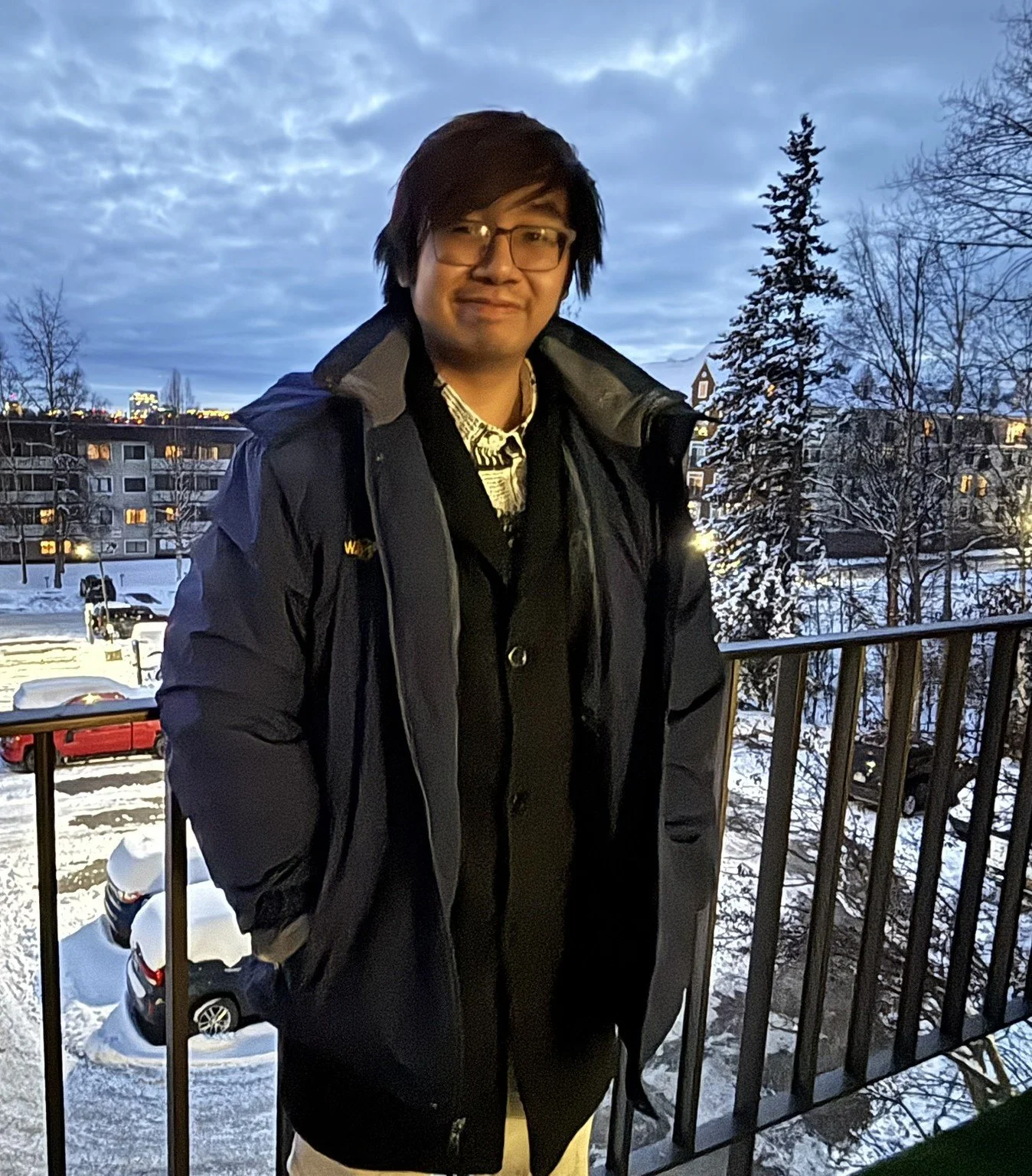
Jayson still wears the coat he had when he was on the street.
Building futures: With strategic, proven supports, people move ahead in life.
‘The help is out there’
Jayson is settling into early adulthood with a love of competitive chess, his own place and a good job, doing for himself in ways that seemed impossible just a few years back.
During the pandemic, he tried to be on his own. His family had hunkered down in Arizona but he returned to his home state of Alaska. He was working but jobs don’t usually come with life skills. He was 18 and overwhelmed.
“I had to hand my phone over to the landlord for her to pay herself rent. I couldn’t buy my own food. I had money. I just didn’t know anything about bank accounts,” Jayson said.
He moved to a different place, renting from his prior landlady’s son, a fellow chess aficionado. He was depressed and became irregular at work. He says he was gaming and eating and not much else. He lost his rental.
Jayson went from being a winning chess player to a kid on the street in Anchorage. He couldn’t think about much except how to stay warm and where to sleep. He was in survival mode. “I was scared. I was cold. I walked around a lot to stay warm. I walked miles and miles and miles,” Jayson said. “I got to know the ins and outs of which businesses would let me come in, get some water, stay for a while trying to get warm.”
Survival skills and life skills
He slept outdoors on benches then bounced between Anchorage Gospel Rescue Mission and friends or just people he met along the way. Drug dealers approached him. Someone stole one of his backpacks. Eventually, another youth told him about Covenant House.
“I had no idea the resources, the amount of services that were at my disposal just because of my age,” Jayson said. He landed in the Covenant House shelter — the Youth Engagement Center. “It felt like heaven, honestly.”
After about a month, he moved into Rights of Passage, a transitional housing program where youth can gain essential life skills from job readiness to budgeting to cooking and meal planning.
“It was at Rights of Passage that I found the skills I needed to succeed,” said Jayson. A year or so later, he moved up to the Covenant House Lofts, then-brand-new transitional housing for those who are nearing independence.
Jayson advocated for himself and worked with Covenant House staff to ensure he was on the list for Coordinated Entry. That program, part of the HUD-funded Anchorage Continuum of Care, collects information from those experiencing homelessness, including those in transitional housing, so that those who are highest priority rise to the top for referrals to housing.
A path through Coordinated Entry
While adults 25 and older may wait years for a referral, youths often move through the system more quickly, by design.
Within a week of enrolling in Coordinated Entry, Jayson said, he was referred to a rapid rehousing program, which subsidizes rent for a set period.
He had an apartment. But he wasn’t yet stable in housing. When the support ran out, Jayson said, he didn’t have the income needed for rent. He was back at the Lofts.
It can take a few tries to get one’s footing, especially for a youth. Jayson decided to try again through the Coordinated Entry program. The second time around, the process had changed, and he had to pass a course in life skills to get into housing.
Now 23, Jayson has his own place again, a spic-and-span apartment on the edge of downtown Anchorage with a cozy couch, a rack by the door for his shoes, and books in a duffel awaiting shelves. Many are about chess — more for decoration than reading, he says. The rapid rehousing subsidy covers his rent, and he pays for utilities, laundry and food. The plan is that he will be on his own after a year.
He’s working at the Alaska Native Medical Center as part of the talent bank pool, a position in which he works wherever needed, from reception to filing to scheduling.
The Coordinated Entry system was his path to housing and overall, he says, it works well for those with the drive and competency to get their own place. But for those facing extra challenges, the steps needed to be on your own can be challenging to navigate, even with Coordinated Entry.
“Depression made it hard for me to find that motivation to go out there and learn. Resumes, how to get a job, how to practice interviews, things like that,” Jayson said. “That’s why I was in the system for so long.”
The feeling of safety that became ingrained at Covenant House along with steady friendships helped him get to a better place, in his apartment and in the way he sees the world.
Besides his hospital job, he is part of the Anchorage Youth Action Board, a group of youth with lived experience in homelessness or who have faced housing instability who are working together to improve how services, programs and systems respond to young people.
On the street, help can be hard to find
What’s his message to young people who are still in the struggle?
“The help is out there,” Jayson said. When he was on the street, he wishes someone gave him a flyer with all the services available.
“I didn’t know about Covenant House. I didn’t know about Bean’s Café. When I was on the streets, I didn’t think to look for more than what I had. I thought ‘this is all I can have. This is all I can do.’”
Eventually, he wants to return to Covenant House, not as a resident but as staff. He has learned so much. Others are still going through it. Maybe, he says, he can help.