
Eight insights about this work
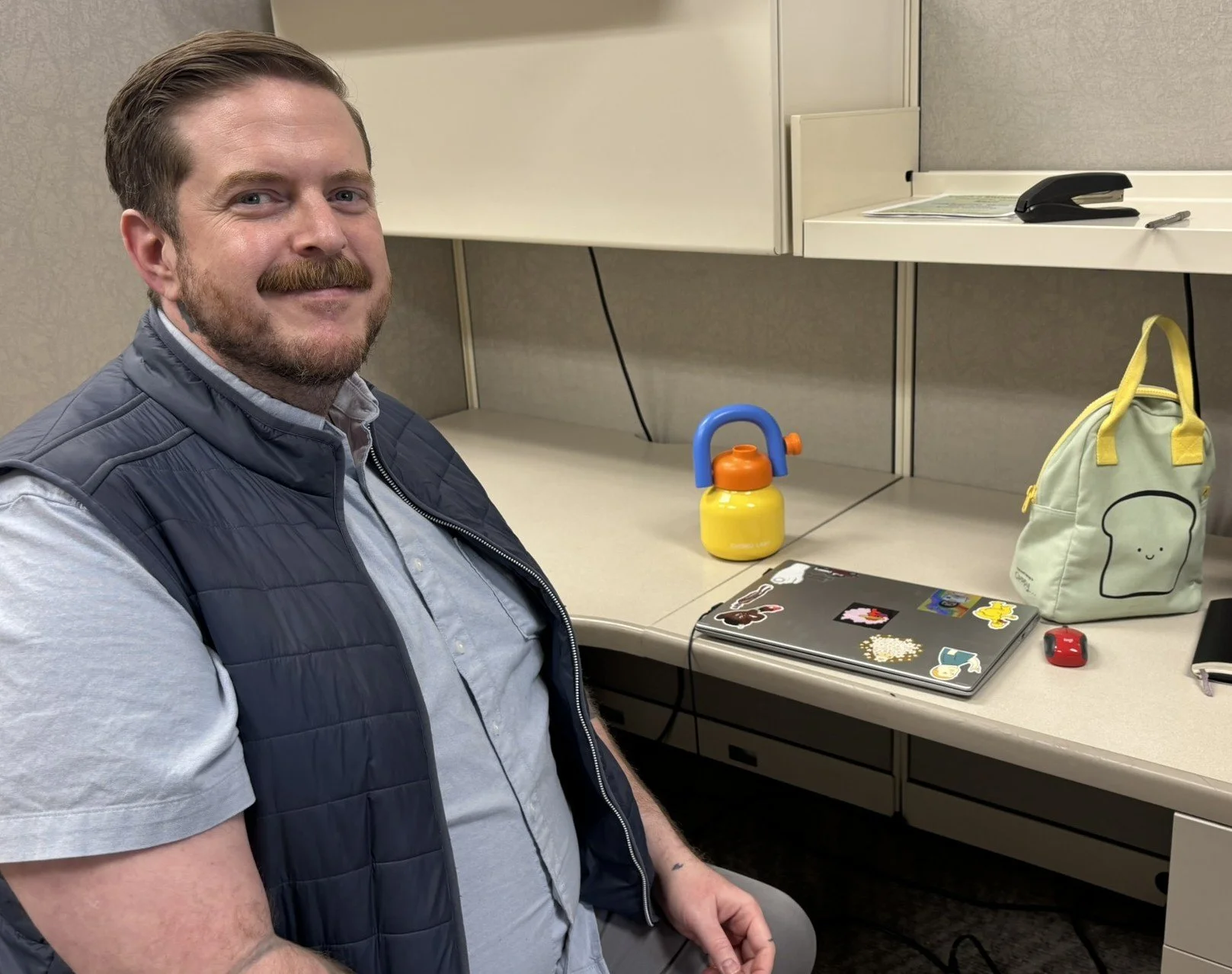
Jonathan Cuddy is seen at the Anchorage Coalition to End Homelessness in April 2026. He rarely had time to sit at his desk.
Jonathan Cuddy just graduated from the University of Alaska Anchorage with a bachelor’s degree in social work. As part of the program, BSW students complete a practicum — hands-on experience in the field. We were lucky Jonathan chose the Anchorage Coalition to End Homelessness. (One coworker put it best: We wish his last day was “never.”) Jonathan graciously agreed to reflect on his time with ACEH. Jonathan is continuing his studies and pursuing a master’s in social work.
1) What did your day-to-day work at ACEH look like — and what surprised you most?
Jonathan: The wonderful thing about doing my practicum at ACEH was that each day was different. One day I may be tromping through the woods trying to connect people who experience homelessness with resources, the next I might be sitting through meetings where policy surrounding homelessness is being discussed and often decided. My favorite days though, were the days when ACEH was open to the public. On those days, I would make sure the coffee was ready, the warm weather gear stocked, and that I was prepared to support people on what may be the worst day of their lives.
2) What's one thing you wish more people understood about homelessness?
Jonathan: People who experience homelessness find ways to make meaning of their lives just as we all do. They learn to adapt to the harshest of conditions while trying to find joy where they can. Every person in the world wants to feel as if they are not alone and that they matter — people who experience homelessness are no different.
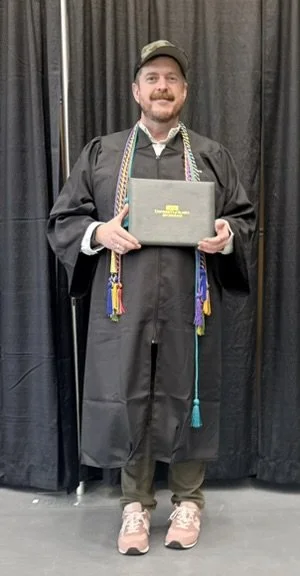
Jonathan at his UAA graduation on May 3, 2026.
3) How did this practicum shape your view of social work in the real world?
Jonathan: I am so grateful I was able to complete my practicum experience at ACEH. Learning about how hard a nonprofit has to work to keep meeting the needs of the people they serve was eye-opening. I believe this experience has given me a solid foundation for all of my future social work endeavors.
4) From what you saw first-hand, where is our community making progress — and where are the biggest gaps?
Jonathan: There is a real effort among the agencies supporting people who experience homelessness to work together, share resources and think of new ways to solve difficult challenges. Sitting in rooms and listening to various agencies talk about how they can help a specific person who may be having a tougher time gave me a lot of hope that we really can end homelessness.
As far as gaps, agencies need more funding to support people who experience homelessness. In order to meet people where they are at, we must rely on programs that have been proven to be effective, like Housing First. We cannot rely on the justice system to solve this challenge; in fact, I believe criminalizing homelessness is moving in the wrong direction.
5) Is there a moment or interaction from your time here that you’ll carry with you?
Jonathan: There are so many moments that I will carry with me from this experience, but one really stood out to me. While volunteering at ACEH’s annual Project Homeless Connect event, I was able to help an individual obtain cold weather gear. The man was in a walker and was having trouble navigating the crowds. Being able to help this man while also showing him dignity and worth, which many people experiencing homelessness are often not afforded by the world, meant everything to me. I felt honored to be in a position that I could offer him that respect. The moments that mattered to me most were the moments I connected with the people ACEH serves. Experiences when the social work stars seem to align and I was able to help someone more than they expected were amazing, and I will never forget it.
Michaela Franklin, ACEH’s youth systems improvement manager, supervised Jonathan’s work. Here are her thoughts:
6) Some social service organizations might be apprehensive about a college practicum student integrating into what is often heavy work. How did you approach the role of mentor? What’s one takeaway you can offer other organizations?
Michaela: The unknowns can be intimidating, especially for someone who hasn’t supervised a student before. I approached it with a lot of transparency and flexibility. I didn’t feel like I needed to have everything perfectly figured out. Instead, I focused on creating a place where my student could learn, ask questions and be part of the work in a meaningful way. I was intentional about balancing exposure to real systems work with support and reflection. This field can be heavy, so making space to process experiences and ask “why” behind the work felt just as important as the work itself.
It was also incredible to watch my student grow over the course of their practicum. Seeing their confidence build, the way they engaged with the work, and how they began to understand complex systems in real time was really meaningful.
One takeaway I’d offer is that students don’t need ‘perfect’. They need access, transparency and guidance. If you can involve them in real conversations, explain your decision-making, and treat them as part of the team, they’ll gain so much more from the experience.
7) You also have a bachelor’s degree in social work. How important is student field experience in preparing individuals for real jobs?
Michaela: Field experience is vital. It’s where the classroom concepts start to make sense. Social work, especially in systems like homelessness response, is complex and constantly changing. You can learn the theories in school, but field placement is where you learn how systems actually function, how to navigate uncertainty, and how to build relationships with clients and partners. It also gives students a better understanding of what kind of work they want to do in the field. You start to see your strengths, your boundaries, and what environments you thrive in. That kind of clarity is hard to get any other way.
8) Did this experience of being a teacher and mentor impact your view of the work of addressing homelessness? Tell us more!
Michaela: Yes, 100%. When you’re explaining systems, decisions and barriers to someone new, you start to see things more clearly, including both the strengths of the system and the gaps. It reinforced how important it is to stay grounded, especially in a system that can feel overwhelming sometimes. Having come from the same BSW program, it really felt like a full-circle moment for me. I went from being in that learning role to now helping guide someone else through it. It reminded me how important it is to bring new voices into this work. Students ask great questions. They notice things we might overlook. That perspective is valuable, especially in a field that benefits from continuous reflection and improvement.
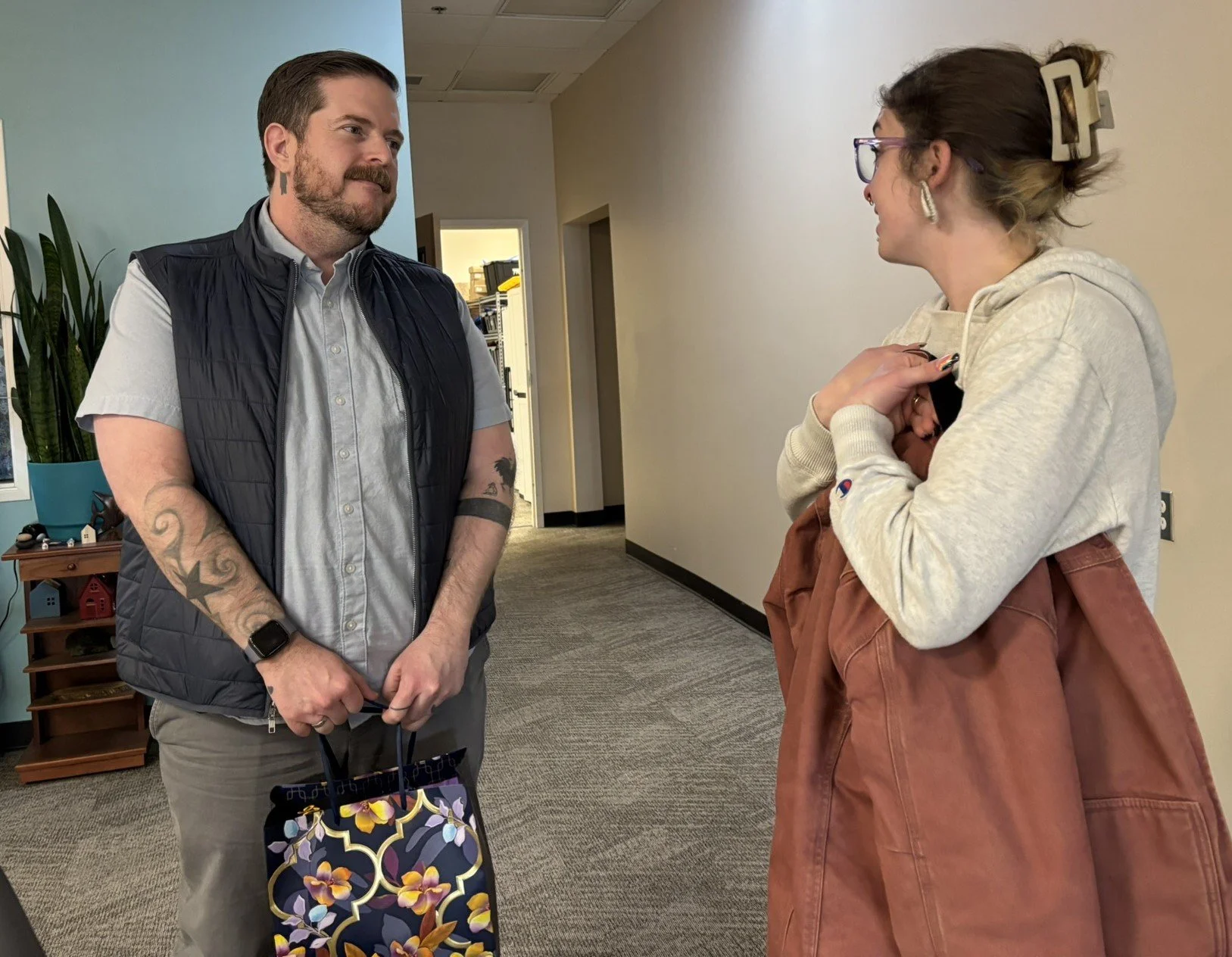
Jonathan Cuddy and Michaela Franklin share a moment on his last day at ACEH.
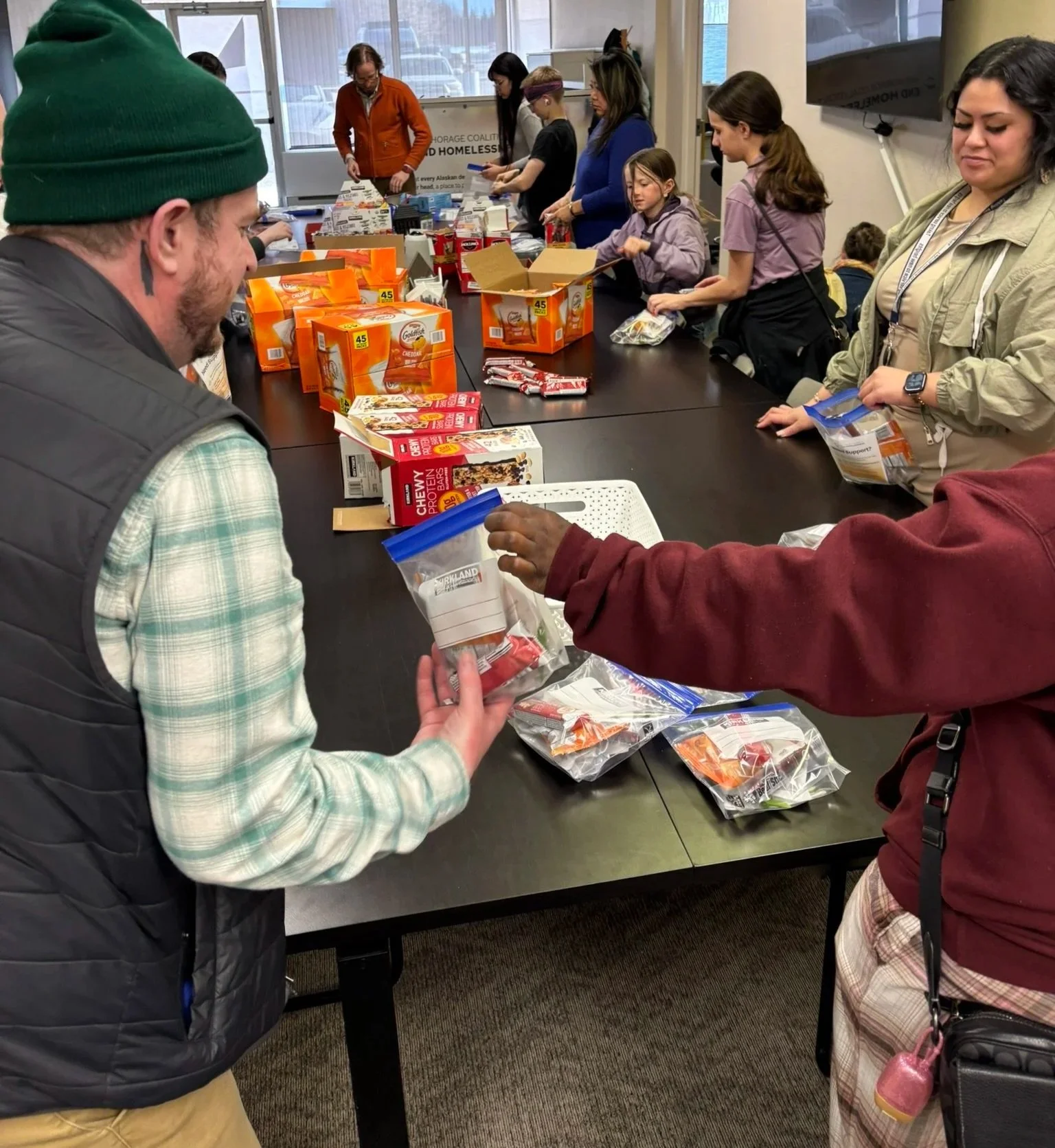
Jonathan, along with other social work students and community members, volunteered at a recent ACEH evening event assembling snack packs for street outreach teams to provide to people living outdoors.